
Tenancy law
SCHUFA and tenant self-disclosure: what students really have to show a landlord
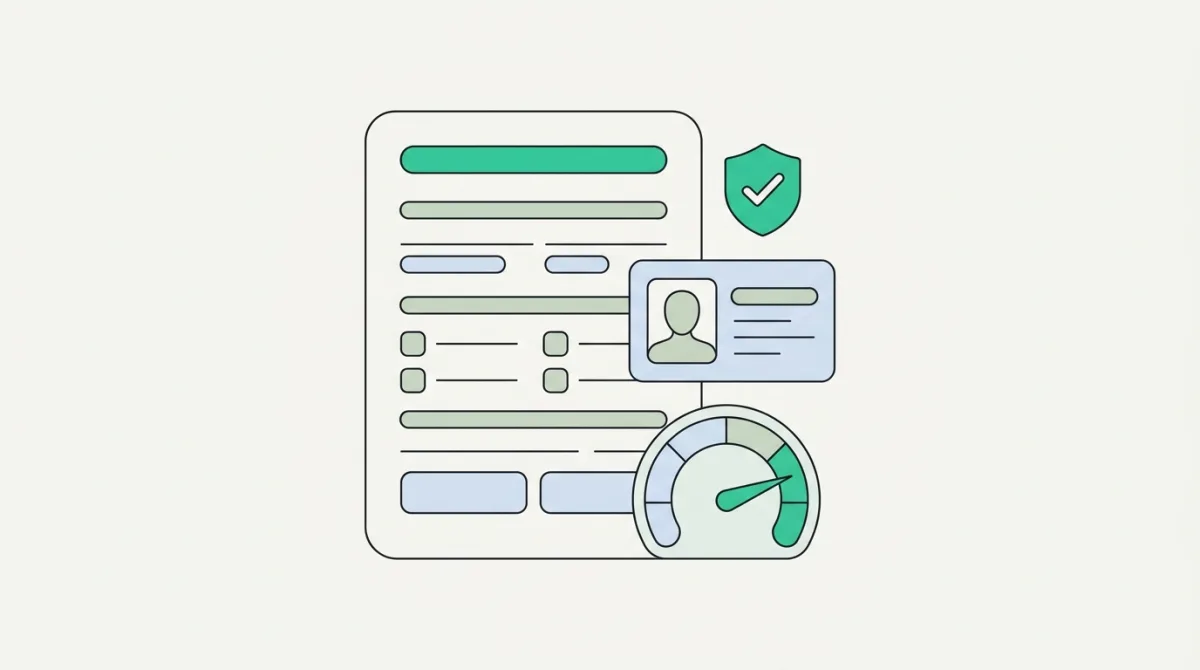
You've found the room or your first flat, and suddenly the landlord wants a SCHUFA report, a self-disclosure form and proof of income. For students without a steady salary that feels like an impossible hurdle. It isn't. You don't have to hand over everything you're asked for, and there's a clear path for missing income: a guarantee. Here's what's allowed, what you can refuse, and how to build an application that wins.
What is SCHUFA and why does the landlord ask?
SCHUFA is a private credit agency. It collects payment history, such as accounts, loans, phone contracts and defaults, and turns it into a credit score. Landlords use it to answer one question: will the rent be paid reliably? That's why a SCHUFA report is now part of almost every application.
For many students their own SCHUFA is reassuringly empty, simply because there are no negative entries yet. That's not a drawback. A clean report with no negative marks is exactly what a landlord wants to see.
SCHUFA report: who asks, who pays?
Here's the key point almost nobody knows: the landlord may not query your SCHUFA directly. A credit report may only be obtained by the person it concerns, which is you. In practice you attach your own report as proof.
Two documents get mixed up here:
- The data copy under Art. 15 GDPR is free and shows you everything stored. It's meant for you, not as something to hand the landlord.
- The SCHUFA credit check (the presentable version) is the one for landlords and costs a fee.
Under the principle of data minimisation, your credit only needs checking once there's concrete interest, i.e. shortly before signing. You don't have to bring your SCHUFA to every viewing. Show it only when the flat is genuinely about to be yours.
Self-disclosure: which questions are allowed?
The self-disclosure is a form about you and your ability to pay. The rule: only questions in which the landlord has a legitimate interest tied to the tenancy are allowed. These include:
- Full name, current address, date of birth
- Job, employer and income
- Whether your wages are subject to garnishment
- The name of your previous landlord and the reason for leaving
- Number of people moving in and pets (for dogs and cats)
- Whether you have rent debts from earlier tenancies
You may and should answer these truthfully. A false answer to a permissible question can later justify a warning or even termination.
Which questions you don't have to answer
Anything unrelated to your ability to pay or the proper use of the flat is off-limits. The landlord may ask, but you don't have to answer. Off-limits in particular:
- Family planning, pregnancy or wanting children
- Nationality, religion, skin colour
- Membership of a party, a club or a tenants' association
- Sexual orientation, hobbies, taste in music
- Smoking, since smoking is part of proper use (German Federal Court, VIII ZR 37/07)
- Prior convictions, unless they relate to a previous tenancy
For an off-limits question you have a recognised right to lie. If you answer a pregnancy question untruthfully, there are no legal consequences, because the question wasn't allowed in the first place. You don't have to choose between honesty and the flat.
No income of your own? The parental guarantee
The classic student situation: there's no employment contract to back the rent. The usual solution is a guarantee (Bürgschaft), usually from your parents. A third party promises to cover the rent if you don't.
There are two forms:
- The directly enforceable guarantee lets the landlord turn to the guarantor immediately. Landlords prefer it because it's faster.
- The deficiency guarantee only kicks in once the landlord has failed to collect from you. It's safer for the parents.
Important: a guarantee needs written form under § 766 BGB. An email or a click won't do.
Deposit and guarantee together: the three-month limit
Here the law protects you. When the landlord demands a guarantee, the same cap applies as for the deposit: three months' base rent (§ 551 BGB). The total is what counts. Deposit plus a demanded guarantee may not exceed three months' base rent together.
Example: if you've already paid a deposit of 1.5 months' rent, a demanded guarantee may cover at most another 1.5 months. If three months' deposit is already in place, an additionally demanded guarantee is void.
Be careful with a voluntarily offered guarantee. The three-month limit only applies to guarantees the landlord demands. If your parents offer a guarantee unprompted, it can be unlimited, and they then answer for everything. Never offer a guarantee blindly as "voluntary"; have it capped at the permitted amount.
In a shared flat, caution matters twice over: if everyone is jointly and severally liable, a parental guarantee can quickly cover the entire flat's rent, not just your own child's share. Have the guarantee expressly limited to your own share of the rent.
What to show when: the right order
Under data minimisation you release data step by step, not all at once:
| Stage | What you show |
|---|---|
| First contact | Name, contact, short intro |
| After the viewing | Completed self-disclosure (permissible fields only) |
| Just before signing | SCHUFA credit check, proof of income or student grant, guarantee declaration |
That way you reveal sensitive data only when the flat is genuinely within reach.
How to build a convincing application
Landlords often decide in minutes. A complete, tidy file sets you apart from dozens of applicants. Include: self-disclosure, SCHUFA credit check, proof of income or grant or a parental guarantee, a copy of your ID and, if you have one, a "no rent debts" certificate from your previous landlord. How to apply in a competitive city is in our guide to finding a shared room.
And before you sign: check the contract, the rent and the location. That's what Vimmo is for. The app scans the lease for void clauses, compares the rent to local levels and scores the location, before you commit.
Sources
This article is not legal advice. Vimmo provides AI-based estimates without warranty.
Frequently asked questions
Can the landlord query my SCHUFA themselves?
No. A credit report may only be obtained about yourself. You present your own SCHUFA credit check, ideally only shortly before signing.
Do I have to fill in the whole self-disclosure?
Only the permissible fields. Questions unrelated to the tenancy, such as pregnancy, religion or party membership, you don't have to answer and may even answer untruthfully.
How do I get a flat as a student with no income?
Through a guarantee, usually from your parents. When the landlord demands it, it's capped at three months' base rent together with the deposit. Make sure a shared-flat guarantee only covers your share.
What does the SCHUFA report cost for landlords?
The free Art. 15 GDPR data copy is for you only. The presentable version (credit check) costs a fee that you pay yourself.
You might also like

Checking your Nebenkostenabrechnung: deadlines, allocable costs and common errors
Which running costs German landlords may bill, what deadlines apply to both sides, and how to spot and formally challenge errors in your utility statement.
Getting your deposit back: deadlines, deductions and how to claim it
When the deposit is due, how long the landlord may take, what may be held back for running costs, and how to claim your money step by step.